Discovering the World of Physical Force Units: From DYN to Newton and Beyond
The vast universe of physics is built upon fundamental concepts, and perhaps none is more tangible than "force." Whether it's the gentle push of a breeze or the immense gravitational pull between celestial bodies, force dictates movement and interaction. To quantify these interactions, scientists and engineers rely on precise units of measurement. For enthusiasts of crosswords and general knowledge, these units often present intriguing challenges, especially when constrained by letter count. This article delves into the fascinating realm of physical force units, particularly those ranging from 3 to 6 letters, offering a comprehensive look at their definitions, historical context, and significance.
When you encounter a clue like "Physikalische Krafteinheit" (German for "Physical Force Unit") in a puzzle, the specific letter count can be your crucial hint. We'll explore the common answers, from the compact DYN to the globally recognized NEWTON, along with a couple of less familiar four-letter solutions, expanding on their scientific foundations and practical implications.
Unraveling the Essence of Physical Force Units
At its core, force is a push or a pull that can cause an object with mass to change its velocity (accelerate). It's a vector quantity, meaning it has both magnitude and direction. To consistently describe and measure these pushes and pulls, standardized units are essential. Historically, various systems of measurement have emerged, with the two most prominent being the International System of Units (SI) and the Centimetre-Gram-Second (CGS) system.
Understanding these systems is key to appreciating why different units for the same physical quantity exist. The SI system, a modern form of the metric system, is the most widely used system of measurement in science, industry, and commerce today. Its base units are fundamental and interconnected. The CGS system, on the other hand, is an older metric system that preceded SI and is still used in certain specialized fields, particularly in theoretical physics.
The quest to accurately quantify force has led to the development of several units, each with its own story and application. For crossword enthusiasts, identifying the correct physical force unit often boils down to a process of elimination based on the number of letters. Let's explore the prime candidates within our 3 to 6 letter range.
Decoding 3-Letter Physical Force Units: The Enduring Charm of DYN
When the crossword clue points to a three-letter physical force unit, the answer is almost invariably DYN. This compact term represents the dyne, a unit of force within the CGS system. While not part of the modern SI system, the dyne holds significant historical and educational value, and its brevity makes it a perennial favorite in puzzles.
So, what exactly is a dyne? A dyne is defined as the force required to accelerate a mass of one gram by one centimetre per second squared (1 dyn = 1 g·cm/s²). To put this into perspective, it's a relatively small amount of force. For comparison, one Newton (the SI unit, which we'll discuss shortly) is equivalent to 100,000 dynes. This stark difference highlights the scale at which the CGS system typically operates compared to SI.
Historically, the CGS system, which includes units like the dyne for force and the erg for energy, was prominent in scientific research before the widespread adoption of the SI system. It remains relevant in certain areas, particularly in electromagnetism and in some theoretical contexts where smaller units are more convenient. For instance, in fields like classical mechanics or wave theory, dynes might still appear in older texts or specific calculations.
The enduring popularity of DYN in crosswords, even though it's not the primary unit in everyday scientific discourse, can be attributed to its concise nature and distinctiveness. It's a testament to how puzzles can preserve and highlight aspects of scientific history. If you're curious about why DYN frequently appears as a popular choice, delve deeper into Why DYN Is the Popular Physical Force Unit Answer.
Exploring 4-Letter Force Units: POND and PONT
Moving up a letter, the realm of 4-letter physical force units introduces us to less commonly encountered terms, primarily POND and sometimes PONT. These units represent a departure from the strict SI or CGS definitions and often stem from older, gravitational systems of measurement.
POND: A Glimpse into Gravitational Units
The term POND often refers to the 'kilopond' or 'pond-force' (kp or pf), which is a unit of force derived from the gravitational pull. Specifically, one kilopond (often just called a pond in older contexts or informal usage) is defined as the force exerted by a mass of one kilogram under standard gravity (approximately 9.80665 m/s²). Essentially, 1 kilopond is equivalent to 9.80665 Newtons. This makes it a 'gravitational unit' of force, contrasting with 'absolute units' like the Newton or dyne which are defined purely by mass and acceleration.
Ponds and kiloponds were historically used quite extensively in engineering, particularly in some European countries, for measuring weight and related forces. For instance, the strength of materials or the load-bearing capacity of structures might have been specified in kiloponds. While the SI unit Newton has largely replaced it in modern engineering and scientific contexts, its historical presence means it occasionally surfaces in specialized applications or, indeed, in crossword puzzles that delight in historical or less common terms.
PONT: The Enigma of the Four-Letter Force
PONT is a less frequently encountered term than POND when referring to a physical force unit, and its exact origin as a standalone force unit can be somewhat elusive in standard physics literature. It's possible it refers to an older, regional, or highly specialized unit, or perhaps an archaic variant of 'pond'. In some contexts, 'pont' might be related to terms used in specific engineering disciplines or historical measurement systems that are no longer in widespread use.
Its appearance in crosswords highlights the diverse and sometimes obscure vocabulary that puzzles draw upon. For a crossword solver, if POND doesn't fit the context or other letters, PONT might be a viable alternative, suggesting an exploration into more niche historical units. While less direct than DYN or NEWTON, these four-letter units remind us that the history of scientific measurement is rich with diverse approaches to quantifying the physical world.
The Dominant 6-Letter Unit: NEWTON
When the puzzle calls for a six-letter physical force unit, the undisputed champion is NEWTON. Named after the legendary Sir Isaac Newton, whose laws of motion laid the groundwork for classical mechanics, the Newton (symbol: N) is the standard SI unit of force and is fundamental to modern physics and engineering worldwide.
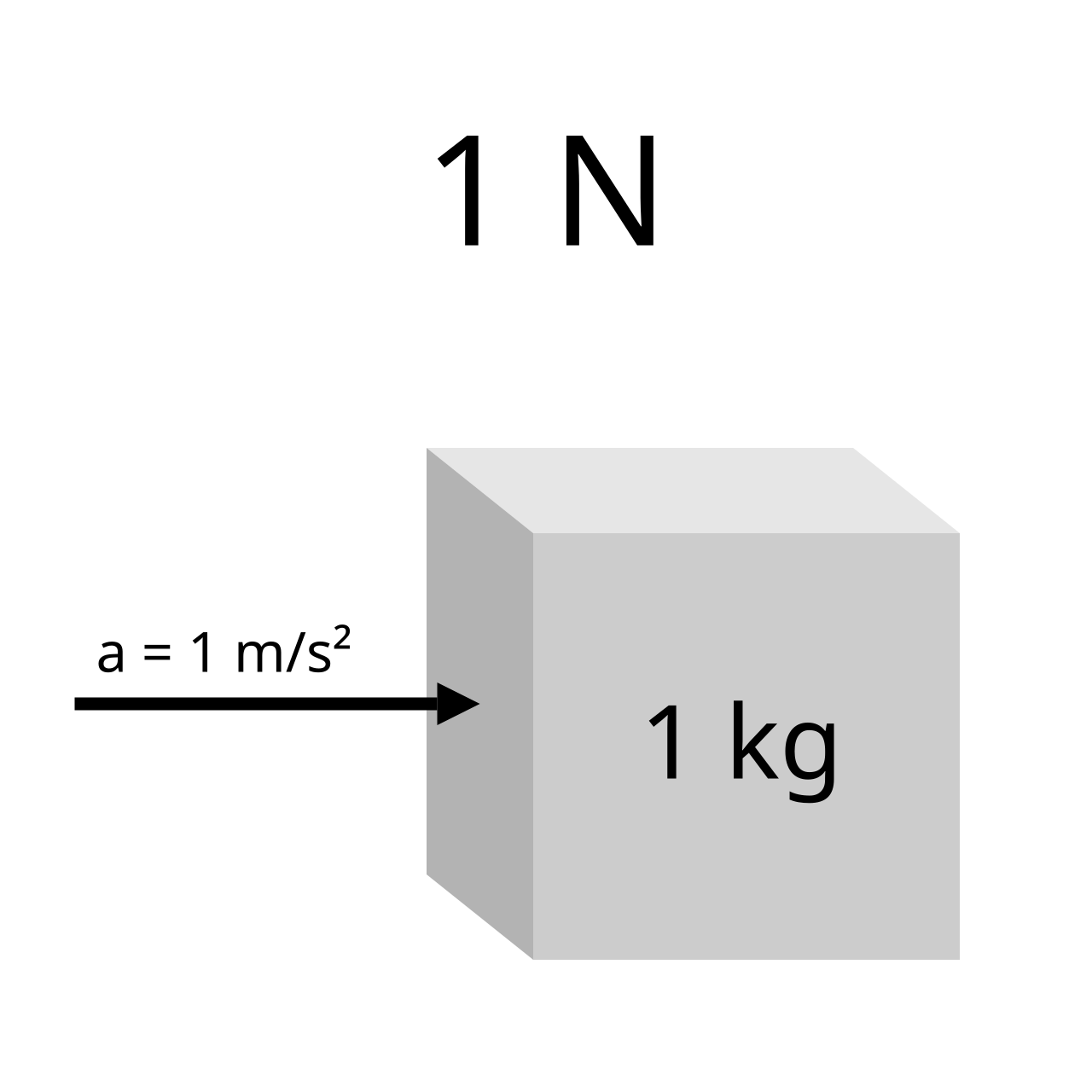
The definition of a Newton is elegantly simple yet profoundly impactful: one Newton is the force required to accelerate a mass of one kilogram by one metre per second squared (1 N = 1 kg·m/s²). This definition directly reflects Newton's Second Law of Motion (F=ma, or Force = mass × acceleration).
Unlike the dyne, which is a CGS unit, the Newton is designed to integrate seamlessly with other SI base units like the kilogram (mass), meter (length), and second (time). This makes it incredibly versatile and practical for describing forces in a wide array of phenomena, from the propulsion of a rocket to the impact of a bowling ball. To give you a practical sense of its magnitude:
- The force of Earth's gravity on a small apple is approximately 1 Newton.
- A typical human punch can deliver forces ranging from hundreds to thousands of Newtons.
- The thrust of a small jet engine can be measured in kiloNewtons (kN).
The significance of the Newton extends far beyond the classroom. It is the unit of choice for engineers designing bridges, physicists studying particle interactions, and even meteorologists forecasting weather patterns. Its universal acceptance and clear definition make it the cornerstone of force measurement in contemporary science.
For those tackling crosswords, recognizing NEWTON as the primary 6-letter physical force unit is almost a given. Its prominence means it's often the first unit that comes to mind when discussing force. For more comprehensive crossword solutions that include both DYN and NEWTON, explore Physical Force Unit Crossword Answers: DYN, Newton, & More.
Beyond Crosswords: Why Understanding These Units Matters
While the immediate motivation for learning about DYN, POND, PONT, and NEWTON might be to conquer a challenging crossword puzzle, the deeper value lies in understanding the evolution of scientific thought and the precision required to describe our physical world. Each unit tells a story of a specific era, a particular scientific approach, or a system of measurement that contributed to our current understanding.
Historical Context and Scientific Evolution
The existence of units like the dyne (CGS) alongside the Newton (SI) highlights the progression of scientific standardization. Early scientists often developed measurement systems independently, leading to a proliferation of units. The move towards SI was an international effort to create a coherent, universally understood system, facilitating global scientific collaboration and communication.
Practical Applications and Conversion
Even if you mostly work with Newtons, knowing about dynes or even historical units like the pond can be beneficial. It helps in interpreting older scientific literature, understanding specialized fields, and performing conversions when necessary. For instance, knowing that 1 Newton equals 100,000 dynes allows for seamless translation between CGS and SI contexts.
Enhanced Problem-Solving Skills
For students and professionals, a thorough grasp of different force units reinforces foundational physics principles. It sharpens your ability to think critically about magnitudes, scales, and the underlying equations that govern force. It also helps in identifying potential errors in calculations if units are mismatched or misunderstood.
Ultimately, whether it's for a puzzle or for deeper scientific inquiry, a nuanced understanding of these physical force units enriches your appreciation for the meticulousness and ingenuity inherent in the study of physics. It underscores that even seemingly simple concepts like "force" are supported by a rich tapestry of historical development and precise definitions.
Conclusion
From the succinct 3-letter DYN to the universally recognized 6-letter NEWTON, and encompassing the historically significant 4-letter POND and its less common counterpart PONT, the units of physical force offer a fascinating journey through scientific history and modern measurement. These terms, often encountered in the intriguing landscape of crossword puzzles, are much more than mere solutions; they are gateways to understanding fundamental principles of physics.
By exploring their definitions, origins within the CGS and SI systems, and their relative magnitudes, we gain a deeper appreciation for the precision required to quantify the pushes and pulls that shape our universe. So, the next time you encounter a clue for "Physikalische Krafteinheit" in a puzzle, remember the rich scientific narrative behind DYN, POND, PONT, and NEWTON, and use their letter counts as your guide to unlocking the correct answer and a deeper understanding of the forces around us.